The Newbery Medal was named for eighteenth-century British bookseller John Newbery. It is awarded annually by the Association for Library Service to Children, a division of the American Library Association, to the author of the most distinguished contribution to American literature for children. The first Newbery Medal and Honor Books were named in 1922.
Newbery Medal and Honor Books 1922
Newbery Medal and Honor Books 1923 -1928
Following are the winners of the Medal and the books honored from 1929-1930. I've included the synopsis of each just in case it's a book you've been looking for and didn't remember the title.
Images from
wikipedia unless otherwise noted.
1929 Medal Winner
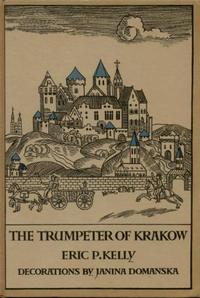
The Trumpeter of Krakow
by Eric P. Kelly (Macmillan)
Set in the chaotic world of medieval Poland, Eric P. Kelly's The Trumpeter of Krakow is an exciting tale of adventure and intrigue for young readers, following the fortunes of the Charnetski family, as they struggle to fulfill a vow made generations before, by one of their ancestors. Fleeing from the raiding Tatars who attacked their estate in the Ukraine, Pan Andrew Charnetski, his wife, and his fifteen-year-old son, Joseph, seek refuge in the city of Krakow. Here, finding their relations absent, and an audience with the king impossible, the family settle, assisted by the kind monk and scholar, Jan Kanty, and living under an assumed name. But their enemies have not given up, and soon they find themselves threatened once again...
Originally published in 1928, and awarded the Newbery Medal, Kelly's debut novel is an engaging blend of historical fiction and fantastic adventure, incorporating both historical figures - King Jagiello, good Jan Kanty - and legendary ones, like the city's dragon-fighting founder, King Krakus. The widespread belief in magic and alchemy in fifteenth-century Poland (as seen in such magical folktales as The Magician of Cracow), proves crucial to the story, which revolves around the fate of the Great Tarnov Crystal - a priceless jewel with strange properties.
Honor Books:
The Pigtail of Ah Lee Ben Loo 
by John Bennett (Longmans)
Contains seventeen poems and short stories: The Pigtail of Ah Lee Ben Loo / The Astonishing Story of the Caliph's Clock / Ye Lily Maiden and Ye Lyttel Taylor-Boye / The Story of the Fool Who Was Willing / The Proud Miss O'Haggin / Abijah's Fourth of July / Little Peter and the Giant / A Jest of Little John / The Land of the Impossible / The Cat, the Cow, the Dog, and the Dairymaid / The Persian Columbus / The Barber of Sari-Ann / Fritz the Master-Fiddler / Ben Ali the Egyptian / Granger Grind and Farmer Mellow / How Cats Came to Purr / Ye Ballad of Scullion Jack / Hans the Otherwise / Ye Olde Tyme Tayle / The Merry Pieman and the Don's Daughter / The Basket / How It All Ended.
Millions of Cats
by Wanda Gag (Coward)
An old couple is lonely - if only they had a pretty white cat! The old man finds a hill covered with cats and brings them home. His wife points out that thay cannot possibly keep them all. The cats get in a fight over who gets to stay, and the couple is left with a scrawny little kitten. With love, the kitten becomes the most beautiful cat in the world.
The Boy Who Was
by Grace Hallock (Dutton)
In the small Italian town of Ravello, this Newbery Honor title follows the story of Nino, the ageless goat-boy guardian of the peninsula of Sorrentum (modern-day Sorrento), overlooking the beautiful island of Capri, in the Tyrrhenian Sea. Presented as a series of stories - each one featuring the gentle, good-hearted Nino - The Boy Who Was documents the mythology and history of the region, from ancient times, when the island of Capri was said to be inhabited by sirens, and witnessed the passing of Odysseus' ship, to the nineteenth-century Carbonari, rebels who hoped to unite all of Italy into one country. Stories include: Siren Songs / The Song of Odysseus / Poseidon and the Greeks / The Romans and the Volcano / The Last of the Goths / The Normans and the Saracens / The Crusader / Students of Salerno / Red Beard and Saint Andrew / The Bandits.
Clearing Weather
by Cornelia Meigs (Little, Brown)
Clearing Weather is an adventure story centered upon the Massachusetts town of Branscomb, and the fortunes of the ship-building Drury family in the early years of American independence. With his Uncle Thomas lying gravely ill, and the family shipyards in serious financial trouble, young Nicholas Drury doesn't know where to turn at the beginning of Clearing Weather. But an unexpected visit from a French radical and his young American companion provide him with the assistance and confidence he needs to begin building anew, while also opening his eyes to the wider political ramifications of New England's stagnating trade. Enlisting the aid of Branscomb's workers, Nicholas soon launches the Jocasta - a Drury ship to rival them all - with his good friend Michael Slade on board to conduct trade in far ports. But when the Jocasta doesn't return for two years, and no word is heard of her, it begins to look as if he has lost it all...
The Runaway Papoose
by Grace Moon (Doubleday)
The ‘runaway papoose’ that the title refers to is Nah-tee - a young Native American girl. One day she is separated from her family and is quite distressed to find herself all alone in the dessert until she meets a young Navajo boy named Moyo. Together she and Moyo traverse the dessert and have many little adventures on their way to reunite Nah-tee with her family.
Tod of the Fens
by Elinor Whitney (Macmillan)
Mystery farce with historical novel aspects set against the development of England's merchant fleet and its trade in wool with the continent in the early 15th century. A bluff and jovial man, with an infectious laugh and a great shock of unkempt hair, Tod of the Fens leads a band of merry rogues and adventurers who live in rude huts in the fens near the port of Boston and prey on travelers for fun. Tod takes into his band Dismas, who is really Henry, the Prince of Wales. For a lark, he wagers Tod's men that in a week and a day he will make fools of all the townsmen in Boston. Assuming various disguises, he steals one by one the five keys to the town strong box. he leaves the contents untouched and deposits the keys at the foot of the steeple of St. Botolph's. The townspeople assume their treasure has been stolen, and suspicion falls on the wrong person. A series of amusing misadventures ensues involving a large number of people until finally Tod of the Fens takes possession of the treasure.
1930 Medal Winner
Hitty Her First Hundred Years
by Rachel Field (Macmillan)
This Newbery Award winner is a timeless classic about a very special doll that belongs to Phoebe Preble. Phoebe brings her beautiful doll everywhere she goes, both on land and sea, and they share many adventures and meet new friends. This is the story of Hitty's years with Phoebe, and the many that follow in the life of a well-loved doll.
Honor Books:
A Daughter of the Seine: The Life of Madame Roland
by Jeanette Eaton (Harper)
This is a fictionalized biography of the French Revolutionary patriot and writer Jeanne Manon Roland de la Platiere (1754-1793), who became known simply by Madame Roland. She was the daughter of a Paris engraver who encouraged his daughter's interest in music, painting, and literature. As a young girl, she told to her grand-mother: "I'll call myself daughter of the Seine," and as an adult she often said that the river was part of her soul. As a young woman she became interested in the radical ideas of Jean Jacques Rousseau and the movement for equality. She shared these enthusiasms with her husband, whom she married in 1780. After the outbreak of the Revolution, she formed a salon of followers, who late became known as the Girondists. Under the constitutional monarchy, her husband became minister of the interior, a post he held after the monarchy was overthrown. Madame Roland both directed her husband's career and influenced the important politicians of the period.
Pran of Albania
by Elizabeth Miller (Doubleday)
"Pran is a daughter of the sturdy mountain tribes of Albania - old enough to be betrothed in accordance with the ancient tribal traditions.
This is the story of Pran and her life in the mountains and the refugee barracks at Skodra; of her friend, the laughing blue-eyed Nush and his secret; of her adventures in war times and peace, of her betrothal and the strange vow she takes." (from the dustjacket)
The Jumping-Off Place
by Marion Hurd McNeely (Longmans)
Follows the story of four young (orphans) homesteaders in South Dakota, in the early years of the twentieth century. When their beloved Uncle Jim dies, the four Linville siblings - Becky, Dick, Phil and Joan - decide to follow his plan (elaborately outlined in a notebook left for them) to homestead out west, on South Dakota's newly opened Rosebud Reservation. Leaving behind their home in Platteville, Wisconsin, they head for the endless prairie, where they encounter back-breaking work, daunting weather, and a family of hostile claim-jumpers whose many acts of vandalism and intimidation range from broken windows to assault. They also encounter community, a beautiful land, a new sense of purpose (in the case of Becky's school-teaching), and a place they can call their own...
The Tangle-Coated Horse and Other Tales
by Ella Young (Longmans)
Irish mythology. this is a children's version of the Fenian Cycle (An Fiannaíocht), in which is told the deeds of the hero Fionn mac Cumhaill and his band of warriors, the Fianna. Opening when Fionn (still known by his childhood name of Demna) is yet a boy, orphaned by the slaying of his father Uail at the hands of Goll, son of Morna, and being raised in hiding by the Druidress Bovemall and the woman warrior Liath, it follows its hero through many adventures, as he regains the leadership of the Fianna, once held by his father, and wins back the lost prestige of the Clan Bassna. The famous episode involving Finnegas the Poet and the Salmon of Knowledge; Fionn's battle with Allyn, son of Midna, which ranged from the gates of Tara to the slopes of Slieve Cullion; his meeting and all-too-brief time with the beautiful Saba, mother of Usheen; and his travels, together with his companions in the Fianna, to the Land Under Wave (told in the the titular selection, The Tangle-Coated Horse), are all laid out in this collection. So too are many other tales, from Keeltya's time as the "king's candlestick," to Diarmid's doomed love affair with Murias, daughter of the King Under the Wave. Finally, the collection closes with the story of Usheen's time with Nee-av in Teer-nan-ogue, and his return to Ireland many centuries later, in the days of St. Patrick - the days when the great cycles of Irish mythology were first recorded.
Vaino: A Boy of New Finland
by Julia Davis Adams (Dutton)
Vaino: A Boy of New Finland is really the story of two Vainos. Opening in October, 1916, it follows the adventures of a young boy named Vaino Lundborg, who witnesses, and is peripherally involved in Finland's struggle for independence from Russia. Through storytelling episodes in each chapter, in which Vaino's mother, Fru Lundborg, relates tales from Finland's national folk epic, The Kalevala, it also sets out the story of the original Vaino (for whom Vaino Lundborg was named): the mythological Väinämöinen.
Little Blacknose
by Hildegarde Swift (Harcourt)
This brief book is a fictionalized "biography" of the DeWitt Clinton (the first steam locomotive to be operated in the state of New York), told from his perspective, and following his story from his early days in the foundry, through the glories of his first exhibition, his years shuttling back and forth between Albany and Schenectady, his retirement to a dusty storeroom, his rehabilitation for the Chicago World's Fair in 1893, and his eventual display in New York City's Grand Central Station.
Have a terrific weekend.
Happy reading,
Angela


 by Elizabeth Coatsworth (Macmillan)
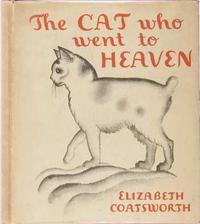
 by Anne Parrish (Harper)

 by Alida Malkus (Harcourt)

 by Ralph Hubbard (Doubleday)

 by Julie Davis Adams (Dutton)

 by Agnes Danforth Hewes (Knopf)

 by Elizabeth Janet Gray (Doubleday)

 by Herbert Best (Doubleday)

 by Alice Lide; Margaret Johansen (Little, Brown)